
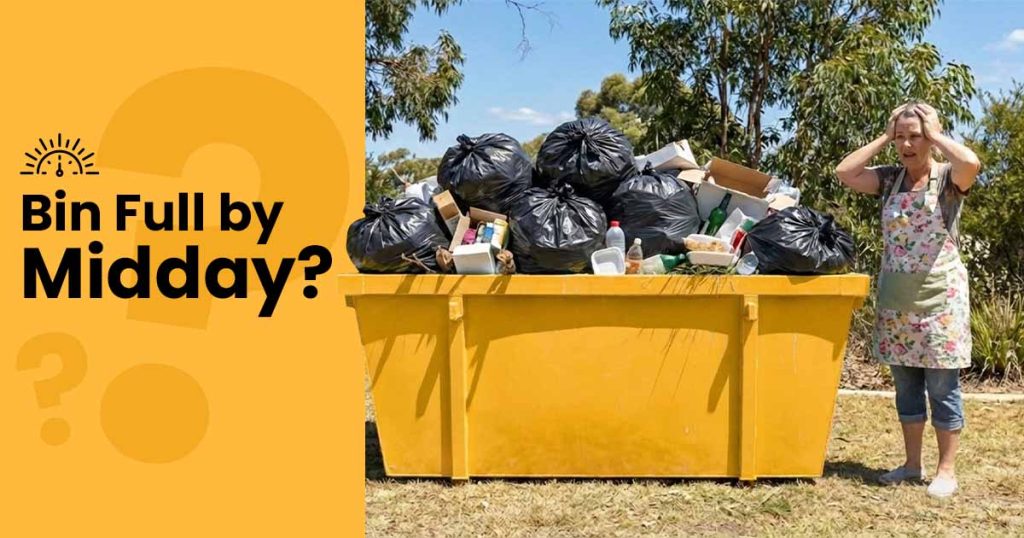
When a skip bin reaches capacity by midday, it signals a failure in operational planning.
For Canberra-based businesses, it is an operational failure point that disrupts workflow, compromises safety, and weakens cost control.
This issue occurs most often on renovation sites, commercial clean-outs, landscaping projects, and multi-day jobs where teams treat waste volume as a fixed input instead of adjusting it as the work progresses.
The issue is not the skip bin. It is the decision-making behind the hire.
A Full Skip Bin Is a Workflow Interruption
Once a skip bin reaches capacity earlier than planned, operations shift from execution to recovery.
Work slows or stops. Materials accumulate on-site. Crews wait for direction. Supervisors and managers must make reactive decisions that the original schedule never anticipated.
Common consequences include:
- Unplanned downtime while waiting for bin swaps or collections
- Additional hire and transport costs
- Increased on-site congestion and safety exposure
- Delays that affect subsequent jobs or client commitments
For business owners, this is not a waste issue. It is an operational control failure.
Why Capacity Is Often Reached Earlier Than Expected
Most capacity problems originate from planning based on bin size labels rather than actual waste behaviour.
In real operating conditions, waste volume is influenced by:
- The nature and sequencing of the work
- How materials are removed and consolidated
- Access constraints that limit efficient loading
- Mixed waste streams reducing usable space
In Canberra, site access limits, verge placement rules, and council compliance requirements make it harder to position and use bins efficiently.
When these factors are not considered upfront, bins reach capacity far sooner than expected regardless of their listed size.
Transactional Hire Versus Operational Planning
Many skip bin providers still operate on a transactional model. A bin is delivered based on a selected size with minimal consideration for how the site operates once work begins.
That approach may be sufficient for low-risk or one-off jobs. It is not designed for commercial environments where predictability, safety, and continuity matter.
Operational skip bin hire is planned differently. It aligns capacity with:
- Waste generation patterns across the workday
- Site access and placement realities
- Safety and compliance requirements
- Project timelines and handover schedules
At Skip Bins Canberra, we integrate skip bin hire into your operational setup rather than treating it as a standalone delivery. This approach prevents mid-job disruptions by aligning capacity with real-world site conditions from the start.
Control is not gained by reacting to a full bin. It is gained by preventing it.
The Commercial Cost of Reaching Capacity Too Early
When a skip bin fills earlier than planned, the visible cost is usually an additional booking. The less visible cost is the disruption it creates across daily operations. This impact is most often seen through:
- Labour standing idle
- Supervisors pulled into avoidable problem-solving
- Projects extending beyond allocated timeframes
- Increased safety risk from unmanaged waste accumulation
Across multiple projects, these inefficiencies compound.
For SMEs and growing organisations, they directly affect margins, scheduling reliability, and client confidence.
Waste removal should function as a predictable operational input, not a variable that introduces uncertainty into the day. Learn more in our FAQ about skip bin planning and capacity management.
Capacity Planning Is a Business Decision
Effective skip bin hire is not about defaulting to larger bins.
Effective planning aligns capacity with how your team generates, handles, and removes waste throughout a job’s lifecycle.
Professional planning considers:
- The type and duration of work
- The waste streams involved
- Access, placement, and compliance constraints
When you plan capacity properly, your waste removal supports workflow and prevents disruptions throughout the day.
If your skip bin hire in Canberra fills by midday, it clearly shows that the setup did not align with operational reality.
Recommended Reads: Comparing Cheap Skip Bins Canberra: Find the Best Option for Your Project
Take Control Before the Bin Arrives
For businesses, waste management should support availability, safety, and operational continuity, not compromise them.
Working with a local provider that understands Canberra conditions and commercial environments reduces risk, improves predictability, and keeps projects running as planned.
If predictable operations matter, your skip bin hire cannot be an afterthought. Book in minutes. Keep your operation running.